
The Passover Preparation
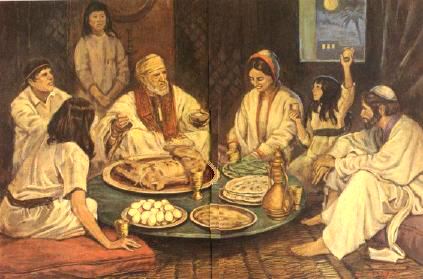
We are now in the season of Lent - the forty day period during which we prepare for the death and resurrection of our Lord. The beginning of Lent also connotes a new section of our Dust of the Rabbi series: The Passover Preparation. The Passover story is an extraordinary one. For both our Jewish ancestors, and Christians today, no event in the Old Testament is more significant than the Exodus; it is the account of salvation that prefigures the work of Jesus.
Just as we annually look towards to the Easter story, so too our Rabbi looked ahead each year to a holiday celebrating God's salvation of His people. As we focus on the Passover this season, let us marvel at the wondrous plan of God; the same Man who celebrated the salvation of Passover each year of His life would Himself become the Passover Lamb who provides salvation for the world.
The First Passover

The Passover is a challenging story for our modern sensibilities. The Israelites, who entered Egypt during the lifetime of Joseph and Jacob, had grown into a numerous people. Four hundred years later, their sheer size had sufficiently intimidated the Egyptians into taking preventative measures; the Pharaohs enslaved our ancestors and put them to forced labor. God, who hears the cries of His chosen people, sends Moses to Pharaoh to demand that the Israelites be released. When Pharaoh refuses, God through Moses performs the Ten Plagues. The last of these plagues is the Passover, where the angel of death comes and strikes down all the firstborn throughout Egypt, both human and livestock. The Israelites, however, are not killed, because the angel "passes over" the houses who slaughter a lamb and put blood on their doorframes. For the full account of this plague, see Exodus 12:21-41.
This punishment seems severe, even in light of the previous genocidal behavior of the Pharaoh who commanded the murder of every Hebrew boy (Exodus 1:15-22). Yet the focus of the story is not on the suffering of the Egyptians, but the protection offered by the blood of the lamb for the Israelites. God's love for the Israelites is personal; in Exodus 4:22 God instructs Moses, "Thus says the LORD: 'Israel is my firstborn son.'" The line is drawn; either God's firstborn son will go free, or Pharaoh's firstborn son (and those of his people) will die. Ultimately, God saves and protects His firstborn son, Israel, from even the angel of death.
In this context, the familiar words of John 3:16 take on a radically new shape. In Exodus, God saves Israel, who He calls His firstborn son, from the final plague of death in Egypt. In John, God gives His only Son, Jesus, unto death on a cross, for the sake of God's love for the world. In the first account, God saves His son from death by the blood of lambs; in the second, God's Son saves us from death by His own blood. The story is different, and yet the same.
We are a people of Passover. Thanks to the Son, we are daughters and sons as well. Thanks to the Savior, we are passed over by the death we deserve. Thanks be to Jesus for the good news: "For God so loved the world, that he gave his only Son, so that everyone who believes in him may not perish but may have eternal life."
Extras

The Seder meal, which we will celebrate on Maundy Thursday, and which our Lenten Small Groups are studying during this season, was a creation of rabbis in the early 1st and 2nd Centuries AD (and some elements were added even centuries later). The development of the Seder came partly from the rabbi's desire to teach Torah to everyday Jews outside of the Temple system, and party as a needed replacement for the Temple observance after 70AD, when the Roman armies destroyed the Second Temple.
Because the Old Testament requires Jews to travel to Jerusalem and offer sacrifices in the Temple there, it is no longer possible to follow a purely Biblical Passover celebration. However, the meal that Jesus shared with his disciples in the Upper Room on the first Maundy Thursday most likely had many of the elements of the modern Seder.